What is Artificial Intelligence and Why It Is Important to Know Its History
Artificial Intelligence (AI) is a field in science and technology aimed at creating systems capable of thinking, learning, and making decisions much like a human does. Understanding how artificial intelligence developed helps to better evaluate its capabilities today and its potential for the future. The history of AI development is a journey from philosophical ideas to powerful algorithms that are already transforming business, medicine, education, and creative industries.
The First Ideas of Artificial Intelligence
Ancient Concepts and Philosophical Foundations
The idea of creating “intelligent machines” appeared long before computers. Even ancient philosophers reflected on logic, thinking, and decision-making mechanisms. These concepts became the foundation for the future development of AI.
In the 17th–19th centuries, the first mechanical computing devices and mathematical models of logic appeared, paving the way for the computer era.
The Birth of the term “Artificial Intelligence”
The 1950s–1960s: The Beginning of the AI Era
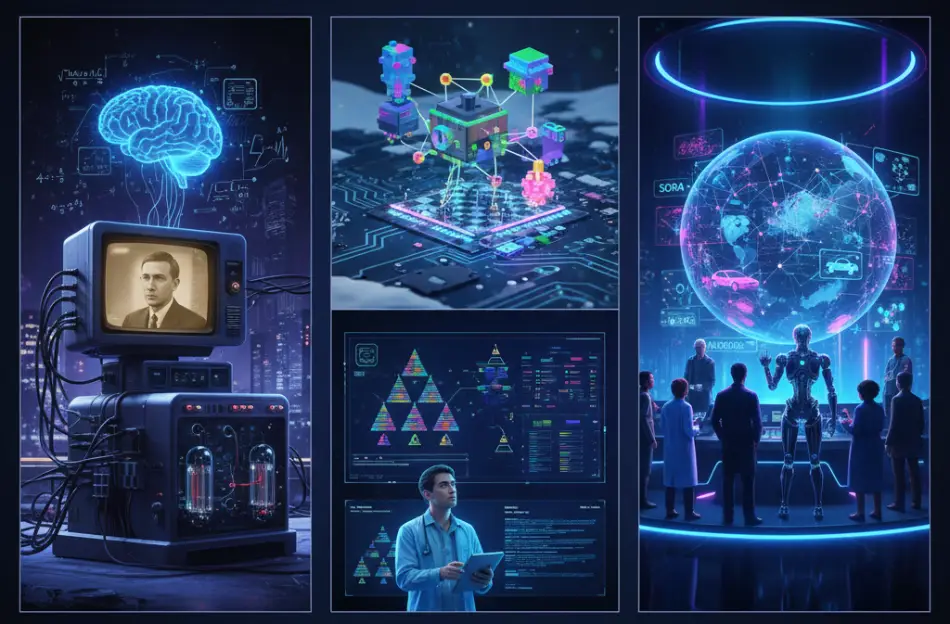
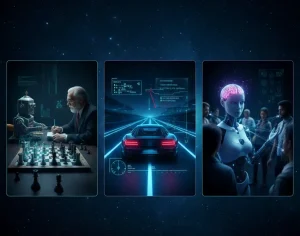
The official starting point is considered to be 1956, when the term “artificial intelligence” was used for the first time at a scientific conference. During this period, scientists believed that creating machines that think like humans was a matter of only a few decades. The first programs appeared that were capable of:
- solving logic problems
- playing chess
- working with symbols and rules
Periods of decline: “AI Winters”

The 1970s–1990s
Expectations turned out to be overstated. Limited computing resources and a lack of data led to a decrease in research funding. These periods became known as “AI winters.“ However, even during this time, the development of algorithms, expert systems, and the theoretical foundations of machine learning continued.
The Revival of AI and the Era of Machine Learning
The 2000s–2010s
With the development of the internet, the growth of data volumes, and increasing computer power, artificial intelligence gained a second life. The main driver became machine learning, where systems learn from examples rather than from rigid rules. A special role was played by deep learning and neural networks, which significantly improved:
- speech recognition
- image processing
- text analysis
The modern stage of artificial intelligence development
AI Today
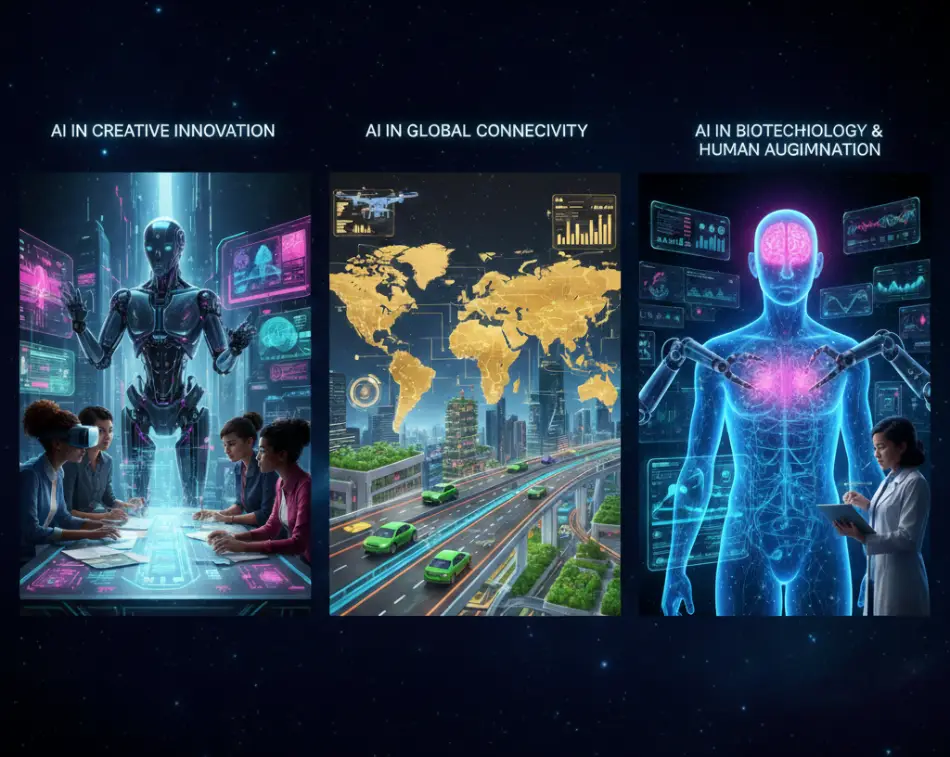
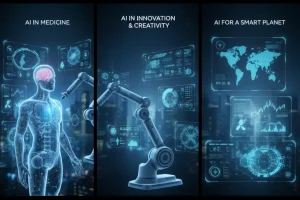
Today, artificial intelligence is actively used in:
- business and marketing
- medicine
- finance
- education
- design and creativity Modern AI systems are capable of not only analyzing but also creating content, predicting events, and personalizing user experiences.
The Future of Artificial Intelligence
AI development is moving in the direction of:
- ethical and responsible use
- combining AI with human creativity
- creating more adaptive and autonomous systems
General Artificial Intelligence (AGI), which thinks like a human, remains a concept for now, but research in this direction continues.
Conclusion
The history of artificial intelligence development is a journey of errors, discoveries, and breakthroughs. From philosophical ideas to modern algorithms, AI has become a powerful tool that is already shaping the future of technology and society.
FAQ – Frequently Asked Questions about the History of AI
- What is considered the beginning of artificial intelligence? The beginning is considered to be the mid-20th century and the emergence of the term “artificial intelligence” in 1956.
- Why were there “AI winters”? Due to a lack of computing resources, data, and overstated expectations.
- When did AI become popular again? In the 2000s–2010s, thanks to the development of machine and deep learning.
- Does human-like artificial intelligence exist? No, currently only Narrow AI exists, which is focused on specific tasks.


Leave a Reply