Artificial intelligence has long ceased to be science fiction from the movies. We use it every day – often without even noticing. It suggests routes in our navigators, recommends videos, helps businesses work faster, and assists people in making better decisions.
In this article, we will explain in simple terms what artificial intelligence is, how it works, and why it is needed in real life.
What is Artificial Intelligence (AI)?
Artificial Intelligence (AI) is a technology that allows computers and programs to imitate human thinking: analyze information, learn from experience, draw conclusions, and make decisions.
Unlike conventional programs that operate according to strictly predefined rules, AI:
- Learns from data
- Identifies patterns
- Adapts to new conditions
- Improves results over time
In simple terms: Artificial Intelligence is “smart” algorithms that get better the more they are worked with.
How Artificial Intelligence Works
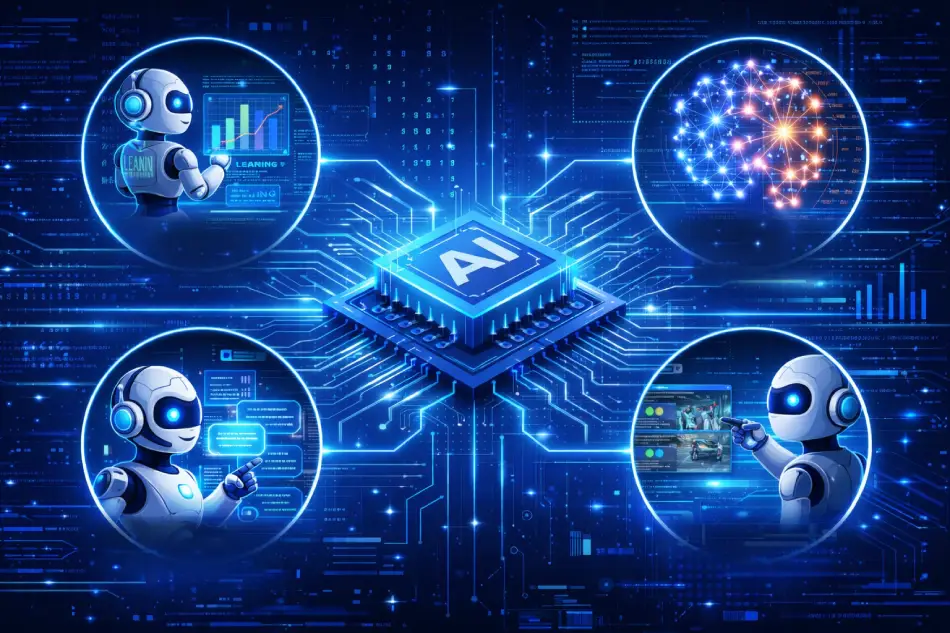
The foundation of AI is large volumes of data and special algorithms. The system analyzes information, finds connections between facts, and makes predictions.
The most common AI technologies:
- Machine Learning – the computer learns from examples
- Neural Networks – models that mimic the functioning of the human brain
- Natural Language Processing – understanding texts and speech
- Computer Vision – recognition of images and video
It is these technologies that allow AI to “see,” “hear,” and “understand.”
Why Artificial Intelligence is Needed
Artificial intelligence was created not to replace humans, but to assist and optimize processes. Its main tasks are:
Automation of routine tasks.
AI takes on monotonous work: data processing, information sorting, and responding to typical inquiries.
Saving time and resources.
What takes a human hours or days, artificial intelligence does in seconds.
Improving decision quality.
By analyzing large volumes of data, AI helps avoid errors and find optimal solutions.
Personalization.
Recommendations for products, content, or services become more accurate and useful for each user.
Where Artificial Intelligence is Used
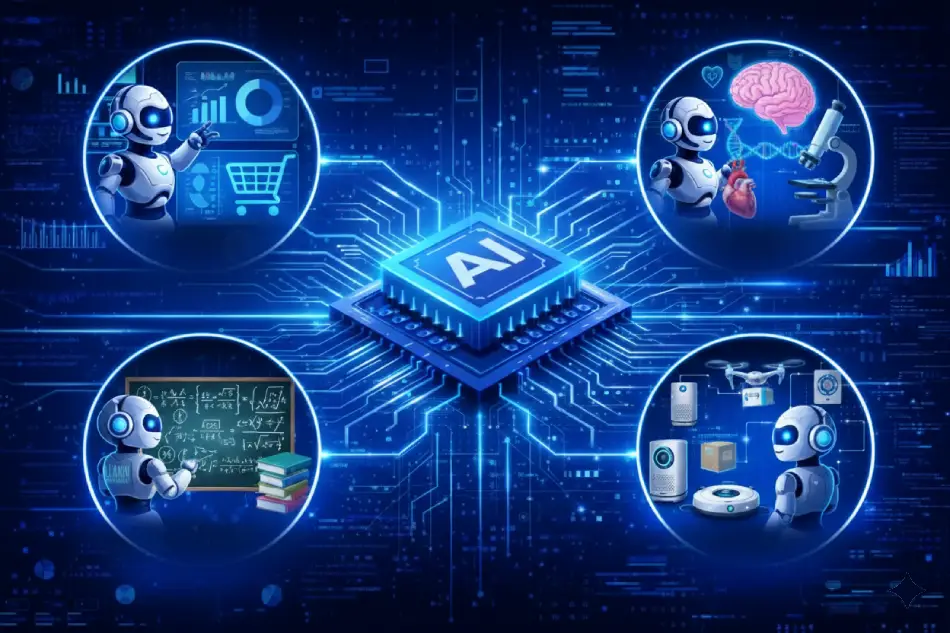
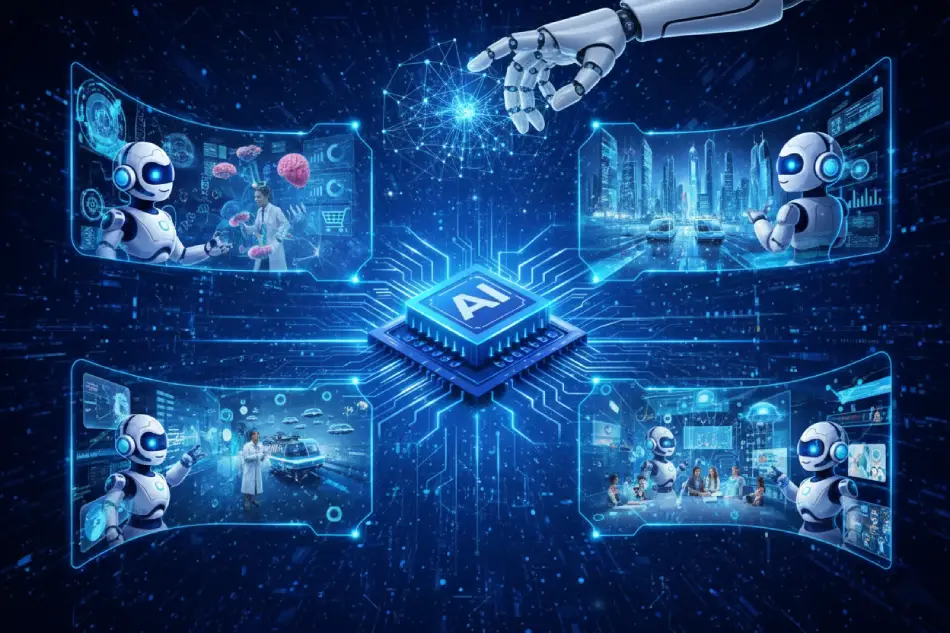
Today, AI is applied in almost all areas of life:
- Business and Marketing – analytics, advertising, sales forecasting
- Medicine – diagnostics, imaging analysis, treatment selection
- Education – personalized learning, online assistants
- Creative Industries – design, texts, music, video
- Daily Life – smart homes, voice assistants, cameras
Artificial intelligence is already making life more convenient and efficient.
Is Artificial Intelligence Dangerous?
AI is a tool. Its benefit or harm depends on how and by whom it is used. Modern artificial intelligence does not have its own consciousness, emotions, or desires. It operates within the algorithms set by humans.
That is why the following are so important:
- Ethical rules
- Responsible use
- Human control
The Future of Artificial Intelligence
Artificial intelligence will continue to develop actively. It will become even more accurate, faster, and more accessible.
In the future, AI will:
- help businesses grow
- open up new professions
- improve the quality of life
- free people from routine
Those who begin to understand and use AI today gain a significant advantage tomorrow.
Conclusion
Artificial intelligence is a powerful tool of modern times that helps people work smarter, faster, and more efficiently.
It does not replace humans; it expands their capabilities.
Understanding what AI is and why it is needed is the first step toward a successful future in the digital world.


Leave a Reply